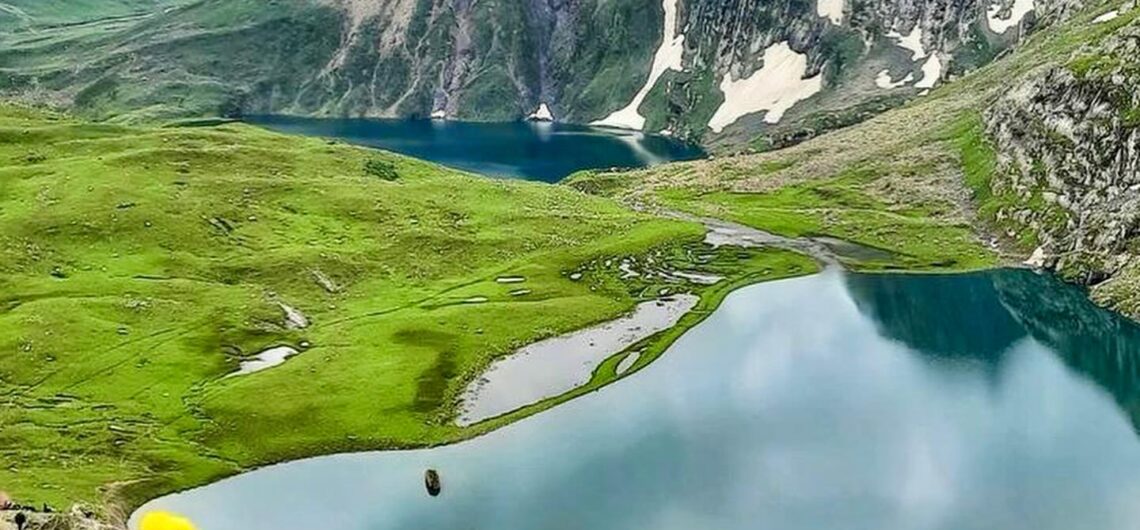
Kashmir is often called “Paradise on Earth,” and if there’s one trek that truly justifies this title, it’s the Kashmir Great Lakes Trek. Nestled in the heart of the Himalayas, this trek is a dream for adventure lovers, offering an unmatched blend of scenic landscapes, high-altitude meadows, glacial lakes, and breathtaking mountain views. Join us at Yeti Adventure as we take you through this once-in-a-lifetime experience!
Why Choose the Kashmir Great Lakes Trek?
If you’re an adventure enthusiast looking for a trek that combines pristine alpine lakes, lush meadows, and rugged mountain trails, the Kashmir Great Lakes Trek (KGL) is the perfect choice. Here’s why:
- Seven Stunning Lakes: The trek takes you through seven magnificent high-altitude lakes, each with its own unique beauty.
- Diverse Landscapes: From dense pine forests to vast meadows filled with wildflowers, the changing scenery keeps the trek exciting.
- Challenging Yet Rewarding: While the trek requires moderate fitness, the spectacular views make every step worth it.
- Less Crowded: Unlike other popular treks, KGL offers a peaceful, off-the-beaten-path experience.
Kashmir Great Lakes Trek Overview
- Location: Jammu & Kashmir, India
- Duration: 7 Days & 6 Nights
- Altitude: Maximum – 13,800 feet
- Difficulty Level: Moderate to Difficult
- Best Time to Visit: July to September
- Total Distance: Approx. 75 km
Day-wise Itinerary of the Kashmir Great Lakes Trek
Day 1: Arrival in Srinagar – Drive to Sonamarg (7,800 feet)
- Your journey begins in Srinagar, where our team from Yeti Adventure will pick you up.
- A 3-hour drive takes you to Sonamarg, a picturesque town surrounded by lush valleys and snow-capped peaks.
- Acclimatization and overnight stay at a campsite in Sonamarg.
Day 2: Sonamarg to Nichnai (11,500 feet) – 9 km (6-7 Hours Trek)
- The trek officially begins with a steep ascent through beautiful meadows.
- You’ll pass Maple and Pine forests, cross a few streams, and gradually gain altitude.
- After 6-7 hours of trekking, we reach the Nichnai campsite, set in a stunning valley with a stream flowing nearby.
Day 3: Nichnai to Vishansar Lake (12,000 feet) – 12 km (6-7 Hours Trek)
- The trail takes you over the Nichnai Pass (13,100 feet), offering breathtaking panoramic views.
- A gentle descent brings you to Vishansar Lake, one of the most stunning lakes on the trek.
- Vishansar Lake reflects the surrounding mountains like a mirror, creating a surreal landscape.
Day 4: Vishansar to Gadsar (13,750 feet) – 14 km (7-8 Hours Trek)
- Today’s trek includes a steep climb to Gadsar Pass (13,800 feet), the highest point of the trek.
- The view from the top is jaw-dropping, with Vishansar and Krishansar Lakes visible below.
- A descent through meadows filled with wildflowers leads to Gadsar Lake, known for its blue waters.
Day 5: Gadsar to Satsar Lakes (12,000 feet) – 12 km (6-7 Hours Trek)
- The terrain today is relatively easier, passing through beautiful rolling meadows.
- You’ll trek alongside snow-fed streams before reaching the Satsar Lakes, a collection of small alpine lakes.
- Enjoy a peaceful night at the Satsar campsite, surrounded by untouched nature.
Day 6: Satsar to Gangbal Twin Lakes (11,500 feet) – 11 km (6-7 Hours Trek)
- A challenging yet rewarding day! You’ll cross rocky terrains and reach Zaj Pass (13,400 feet).
- From the top, you get a breathtaking view of the twin lakes – Gangbal and Nundkol.
- A steep descent leads to Gangbal Lake, a serene spot perfect for unwinding.
Day 7: Gangbal to Naranag – Drive to Srinagar
- The final day of trekking involves a steep descent through forests and meadows.
- You’ll reach Naranag, a small village with an ancient temple complex.
- A drive back to Srinagar marks the end of this unforgettable trek with Yeti Adventure.
Best Time to Do the Kashmir Great Lakes Trek
The ideal time to embark on this trek is from July to September. During these months:
✅ The lakes are at their best, reflecting deep blue hues.
✅ Meadows are lush green, covered with wildflowers.
✅ Weather remains pleasant, with temperatures ranging between 5°C to 20°C.
Difficulty Level and Fitness Requirements
- This is a moderate to difficult trek, requiring good physical fitness.
- You should be comfortable walking 10-14 km daily on varied terrains.
- Cardiovascular endurance is key – regular running, cycling, or stair climbing can help in preparation.
Essential Packing List for the Kashmir Great Lakes Trek
Here’s a checklist of things you’ll need:
Clothing
✔️ Layered Clothing – Thermals, fleece jackets, and a waterproof outer layer.
✔️ Trekking Pants – Quick-dry and comfortable.
✔️ Gloves & Woolen Socks – Essential for cold nights.
Gear & Equipment
✔️ Backpack (50-60L) – Lightweight and sturdy.
✔️ Trekking Shoes – Waterproof with good grip.
✔️ Sleeping Bag – If not provided by the trek operator.
✔️ Trekking Poles – Helpful for steep descents.
Other Essentials
✔️ Sunscreen & Sunglasses – To protect against high-altitude sun exposure.
✔️ Headlamp – For night walks.
✔️ Water Bottle & Purification Tablets – Safe drinking water is essential.
Why Choose Yeti Adventure for the Kashmir Great Lakes Trek?
At Yeti Adventure, we ensure a safe, memorable, and well-organized trekking experience. Here’s what sets us apart:
✔️ Experienced Trek Leaders – Our guides are highly trained in high-altitude trekking.
✔️ Top-notch Safety Measures – Oxygen cylinders, first aid, and emergency backup plans.
✔️ Comfortable Camping – High-quality tents and sleeping bags for a cozy night under the stars.
✔️ Delicious Meals – Nutritious and tasty food to keep you energized throughout.
Final Thoughts
The Kashmir Great Lakes Trek is not just a trek – it’s a soul-stirring journey through some of the most picturesque landscapes on Earth. If you’re looking for an adventure that combines raw natural beauty, thrilling trails, and serene alpine lakes, this is the perfect trek for you.
So, are you ready to experience paradise? Join Yeti Adventure on this breathtaking journey and create memories that will last a lifetime!